.1729 John Smibert (American colonial era artist, 1688-1751). The Bermuda Group
Family portraits are rare in early 18th century British colonial America, perhaps because they were expensive & usually so large, that they required a sizable public parlor for display. Most 18th-century colonial American houses were not spacious. Family portraits are also much more complicated for the artist, and there were few artists available in colonial America early in the century. But the incidence of family portraits grew, as the number of painters & spaces in homes also grew.
1741 Robert Feke (American colonial era artist, 1707-1751). Family of Isaac Royall.
Some gentlemen had family portraits painted as a sign of wealth & as a factor in gaining respect & power in the new world. The painting announced that they were important, entitled to be the natural leader in the new society. Other family paintings commemorated a specific event. Most were not painted to be tucked away for private family contemplation, but to act as a public icon or an emblematic memory for an audience larger than the immediate family. The composition of family paintings was changing throughout the 18th-century as well.
1747 John Greenwood (American colonial era artist, 1727-1792). The Greenwood-Lee Family
The concept of family was evolving as emerging Enlightenment ideas began to impact everyday domestic life & family values in colonial America. Slowly throughout the century, the strict partriarchal family concept was beginning to change. English philosopher John Locke (1632-1704) implied that women should have greater authority in the family & the home. In portraits, artists began to display the woman on nearly the same level as the husband.
1750 John Wollaston (American colonial era artist, 1710-1775). Family Group
Artists began to feel that they could portray married couples as congenial companions. Painters began to portray men participating more in the rearing of their children, they were no longer just expected to be distant strict disciplinarians. Americans were beginning to believe that children needed to be loved & to play. The individual was also becoming more important in 18th-century America. Artists often used props to signify something about the talents, skills, & identities of individuals within these families. In one way or another, each of the following portraits reflects changing patriarchial values, gender relations, attitudes towards women & children, and the growing democratization of American society. But we still remember that women did not receive the right to vote in the United States until 1920.
1755 Joseph Blackburn (American colonial era artist, fl 1753-1763). Isaac Winslow and His Family
NB For this posting I have excluded portraits of children only. Smibert's Bermuda Group and Copley's family portrait were executed immediately before or after the artist entered or exited the American colonial experience. They are so good, I just couldn't resist stretching the boundries to include them.
1763-65 Henry Benbridge (American colonial era artist, 1743-1812). Gordon Family (Including his stepfather & mother Mary Clark Benbridge Gordon)
1770 Henry Benbridge (American colonial era artist, 1743-1812). The Tannatt Family
1771 Charles Willson Peale (American colonial era artist, 1741-1827). Edward Lloyd Family with wife Elizabeth Tayloe and daughter Anne.
1771 William Williams (American colonial era artist, 1727-1791). The Wiley Family.
1771-73 Charles Willson Peale (American colonial era artist, 1741-1827). The Peale Family.
1772 William Williams (American colonial era artist, 1727-1791). The William Denning Family
1775 Henry Benbridge (American colonial era artist, 1743-1812). The Archibald Bulloch Family.
1776 John Singleton Copley (American-born artist, 1738-1815). The Copley Family.
1779 Edward Savage (American artist, 1761-1817). The Savage Family.
1779 Henry Benbridge (American artist, 1743-1812). The Enoch Edwards Family.
1785 Robert Edge Pine (American artist, 1720-30-1788). Alexander Contee Hanson, Sr. and Family.
1787 Henry Benbridge (American artist, 1743-1812). The Hartley Family.
1788 Johannes Eckstein (American artist, 1736-1817) The Samels Family
1789 Charles Willson Peale (American artist, 1741-1827). Robert Goldsborough & Family.
1789 Edward Savage (American artist, 1761-1817). The George Washington Family.
1790 John Brewster Jr. (American painter, 1766-1854) Morgan Family Portrait
1793 Joseph Wright (American artist, 1756-1793). The Wright Family (Joseph & Sarah with children Harriet, Sarah, & Joseph).
1795 James Peale (American artist, 1749-1831). The Artist & His Family.
c 1795 John Brewster Jr. (American painter, 1766-1854) Deacon Eliphaz Thayer and His Wife, Deliverance
1795 Unknown Artist. The Cheney Family.
1796 Jonathan Budington (American artist, 1766-1854). Portrait of George Eliot and Family.
1796 Ralph Earl (American artist, 1751-1801) The Nickerson Family
1798 John Ritto Penniman (American painter, 1782–1841) Family Group
1798 Ralph Earl (American artist, 1751-1801). Mrs. Noah Smith and Her Children.
1800 Joshua Johnson (American artist, c.1763–1832). Family Group.
.


 1773 John Singleton Copley (1738-1815). Mr. & Mrs. Thomas Miffin (Sarah Morris).
 1773 John Singleton Copley (1738-1815). Mr. & Mrs. Isaac Winslow (Jemima Debuke)
 1775 John Singleton Copley (1728-1815). Mr. & Mrs. Ralph Izard (Alice Delancey).
 1788 Charles Willson Peale (1741-1827). Benjamin and Eleanor Ridgely Laming.
 1790s John Brewster Jr (1766-1854). Dr. John Brewster & His Second Wife (Ruth Avery).
 1792 Ralph Earl (1751-1801). Oliver Ellsworth (1745-1807) & Abigail Wolcott Ellsworth (1756-1818).
+Angelica+Peale++and+Alexander+Robinson.+Reynolda+House,++Museum+of+Art,+Winston-Salem,+North+Carolina.+Reproduction+at+1st-art-gallery.com..jpg) 1795 Charles Willson Peale (1741-1827). Angelica Peale & Alexander Robinson..
1795 Charles Willson Peale (1741-1827). Angelica Peale & Alexander Robinson..


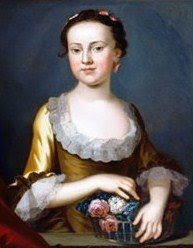.+Anne+Randolph+(Mrs.+Benjamin+Harrison+of+Brandon).+VHS.jpg) 1755 John Wollaston (American colonial era painter, 1710-1775) Anne Randolph (Mrs. Benjamin Harrison of Brandon).
1755 John Wollaston (American colonial era painter, 1710-1775) Anne Randolph (Mrs. Benjamin Harrison of Brandon).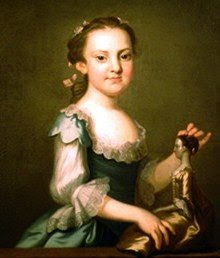.+Elizabeth+Randolph+(Mrs.+Phillip+Ludwell+Grymes).+VHS.jpg) 1755 John Wollaston (American colonial era painter, 1710-1775) Elizabeth Randolph (Mrs. Phillip Ludwell Grymes).
1755 John Wollaston (American colonial era painter, 1710-1775) Elizabeth Randolph (Mrs. Phillip Ludwell Grymes).
.+Mary+Lightfoot.+Daughters+of+the+American+Revolution+Museum,+Washington+DC.jpg)
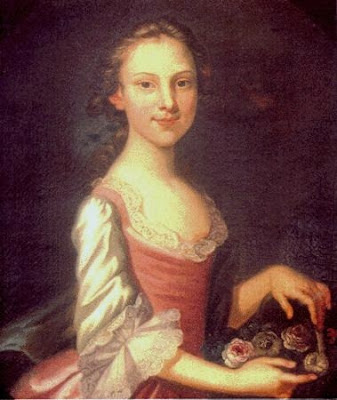.+Mary+Digges+(Mrs.+Thomas+Sim+Lee).+Maryland+State+Archives.jpg) c 1758 John Wollaston (American colonial era painter, 1710-1775) Mary Digges (Mrs. Thomas Sim Lee).
c 1758 John Wollaston (American colonial era painter, 1710-1775) Mary Digges (Mrs. Thomas Sim Lee).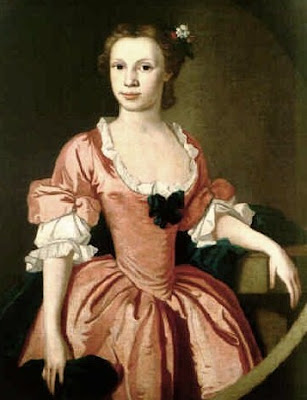.+Portrait+of+a+Girl.+pvt.jpg) 1760s John Wollaston (American colonial era painter, 1710-1775) Portrait of a Girl.
1760s John Wollaston (American colonial era painter, 1710-1775) Portrait of a Girl.


